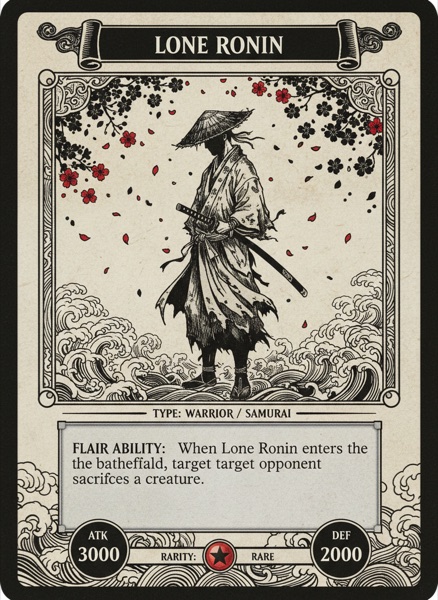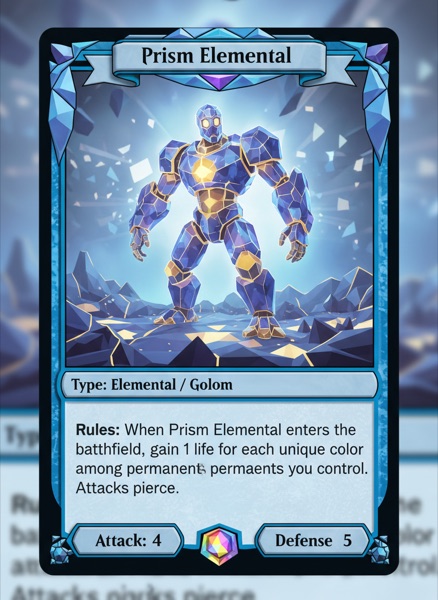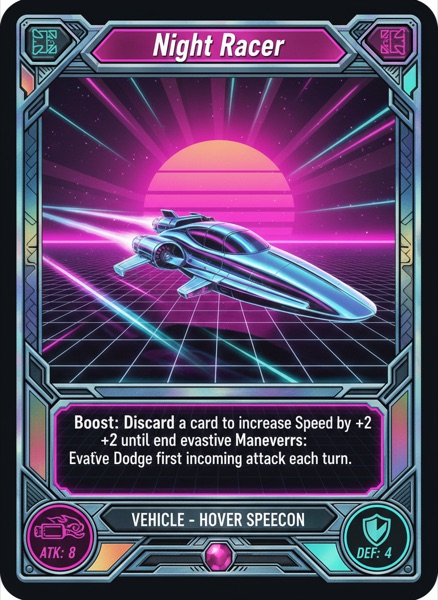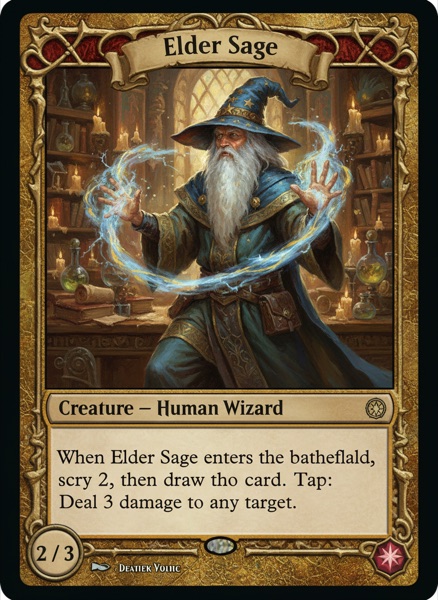
Search "AI tabletop game maker" and the results promise a machine that makes the game. None of them do, and after two years of designers trying, the picture has settled into something more useful than the marketing.
AI in tabletop is good at four things. It makes pictures, it writes and rewrites text, it does bulk data work you'd otherwise grind through by hand, and it builds small throwaway tools on request, the one nobody talks about. What it can't do is the thing everyone hopes for: nothing here plays your prototype 10,000 times and tells you the blue faction wins 71% of the time.
So this is organised by job, ending with what you must disclose before you sell.
ShuffleKit
Best for: AI that sits inside the tool where your game already lives.
The reason we point at this first isn't quality of model, it's context. A general chatbot doesn't know your card list, your keywords or your layouts, so every request starts with you pasting the game back in. ShuffleKit's assistant, Shufflo, is already looking at the project. Ask for thirty cards in the style of yours and it returns a proposal you accept row by row, or ask for artwork and it lands on the card you're looking at. In Docs & Rules it will tell you where a rules document contradicts itself, an underrated use of a language model.
The AI card game maker page shows the panel on a real deck. Free includes 30 image generations and 30 assistant messages a month, paid starts at $8, and you keep full commercial rights. It generates illustrations rather than frames or borders, and proposes card data rather than silently editing your deck. It won't invent a game from one sentence, which is deliberate.
The chat models as your rules desk
Best for: writing, tightening and interrogating the rules text.
ChatGPT, Claude and Gemini are all fine here, and how you use them matters more than which you pick. Most people ask for a rulebook, which is the weakest move available, because what comes back is plausible structure around invented specifics.
Use one as a hostile rules lawyer instead. Paste the rulebook you've written and make it answer awkward cases strictly from that text: deck runs out mid draw, card targets itself, two players claim at once. Every answer it gets wrong marks ambiguous wording, not a stupid model.
Then ask for a rough playable version rather than an opinion. Designers on r/tabletopgamedesign keep rediscovering this: upload cards and rules, get a browser prototype back, iterate in twenty minute rounds. Crude, but a fast way to learn that turn three stalls. Where they let you down is agreement. Ask "is this combo balanced?" and you'll get a yes with reasoning attached.
The art generators, and the consistency problem
Best for: placeholder art now, and a direction you can hand to an illustrator.
Midjourney is what designers reach for when they want something striking. ChatGPT follows a reference image more faithfully, safer when this card must look like that one. Leonardo turns up for its free allowance, and local Stable Diffusion gives the most control if you have the GPU.
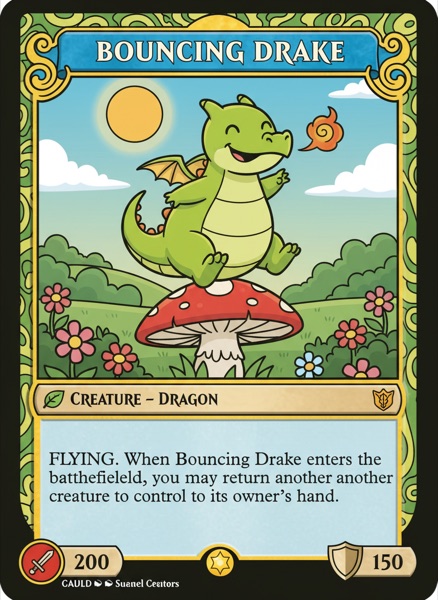
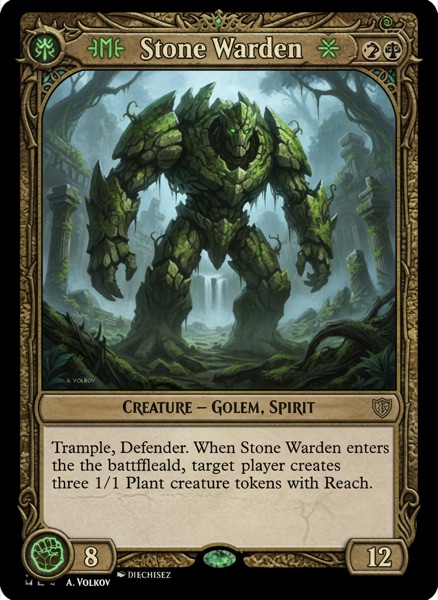
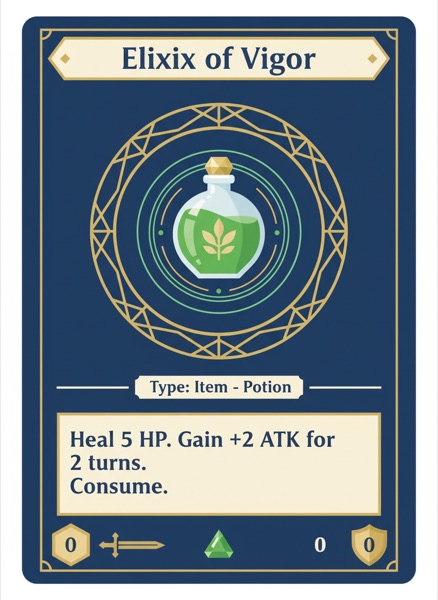
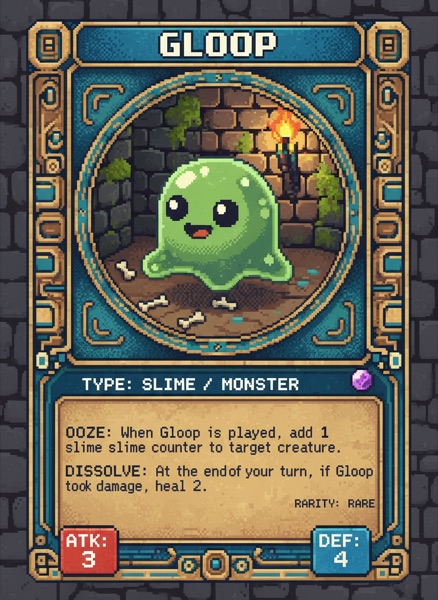
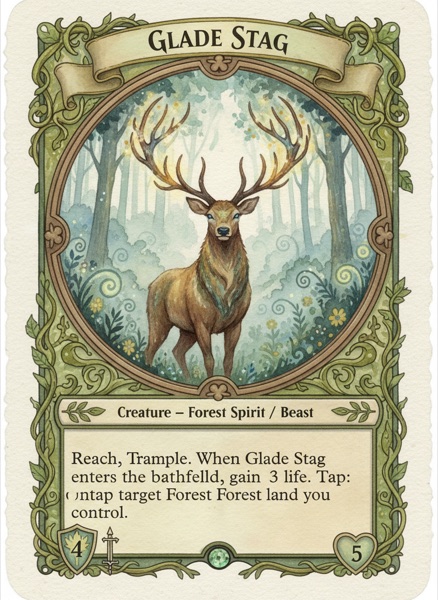
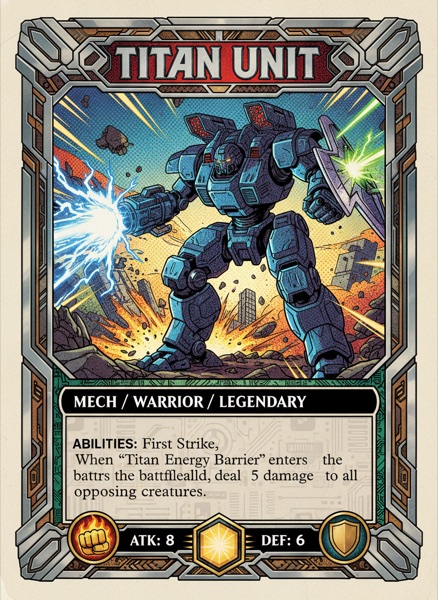
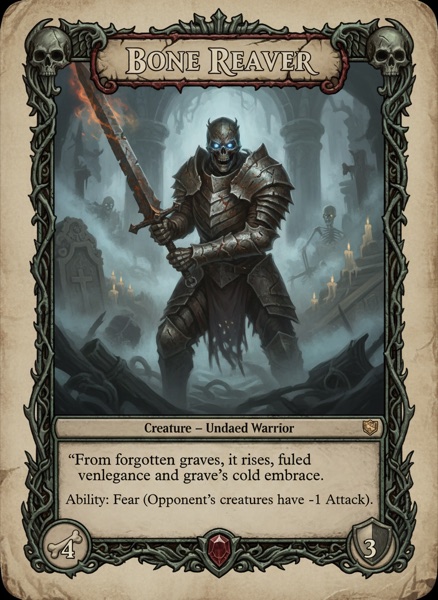
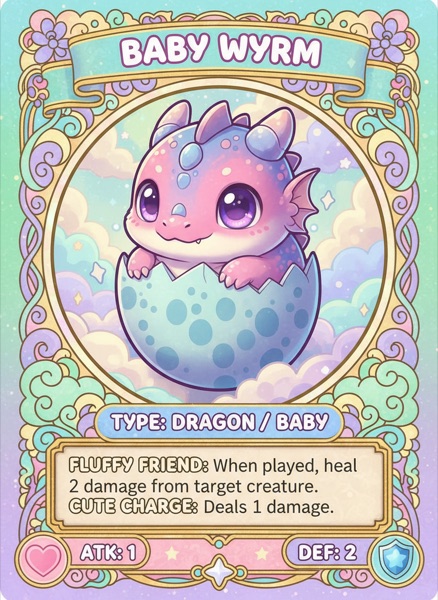
The real problem isn't one good image. It's sixty that look like the same illustrator drew them, because a deck that renders differently on every card reads as cheap even when each picture is lovely. Write a one paragraph art brief (medium, palette, lighting, framing, background) and paste it into every prompt unchanged. Keep every subject at the same distance, lean on style reference features rather than re-describing the look, and run the same post processing across the set.
The ethics are contested and your audience cares. Games have been review bombed for hiding it, so be open.
The gap: AI still can't playtest your game
No tool with real traction takes your rules and components, plays the game properly, and hands back trustworthy balance numbers. A model asked to "simulate ten games" narrates ten stories that sound like games rather than enforcing rules or playing to win.
The workaround is one step sideways. Don't ask the AI to play, ask it to write a small simulator for the one question you care about, then run that yourself. "Shuffle this deck 100,000 times and tell me the distribution of resource cards in an opening hand of seven" is a script current models write well, and you can read it to check. The output is arithmetic rather than vibes.
Everything else needs humans at a table. Where somebody hesitates, the question they ask on turn two, the faction nobody picks: none of that reaches a model. The most software can do is shorten the loop between a problem surfacing and the fix reaching players, which is why our playtable sits beside the editor.
Before you publish: the disclosure rules
None of this is legal advice, and check the current wording yourself, but here's the 2026 shape.
Kickstarter has required AI disclosure since 29 August 2023. Submission asks which AI you used, how its output is incorporated, which elements are generated and how much is your own work, and those answers appear in a "Use of AI" section on the live page. Non-disclosure can get a project suspended, and illustrations, icons, rules text and promo assets all count.
Etsy allows seller prompted AI under its Creativity Standards, but expects disclosure in the listing and real creative input. DriveThruRPG and community content programmes vary, and a programme's terms can be stricter than the marketplace default, so read the specific one and keep a record of what was human made or generated.
Copyright is the one people get backwards. In its January 2025 report the US Copyright Office confirmed AI output can sit inside a work you own, but prompting alone generally doesn't make you the author of an image. What's protectable is your own contribution, meaning the rules you wrote and your selection, arrangement and edits. So the game can be protected while a raw generated illustration in it may not be. A tool's terms are a separate question, and full commercial rights in ShuffleKit means we don't claim ownership and you're free to sell it.
Which should you use?
- AI attached to the actual project? ShuffleKit, free to start.
- Rules text pulled apart before players do it? ChatGPT, Claude or Gemini, as a rules lawyer not a ghostwriter.
- Art fast? Midjourney for striking, ChatGPT for matching a reference, local Stable Diffusion for control.
- A real balance answer? Have a model write a simulator, run it, then test with people anyway.
AI made the first 20% of a tabletop game much faster and left the last 80% exactly as slow. Fine trade, as long as the time saved goes into playtesting. Without the AI framing, see the best tabletop game makers, and for the design work itself our guide on how to design a card game.
If you'd rather your AI lived beside your cards than in another tab, that's what we built. It's free to start, and I read every piece of feedback that comes in. Start free.