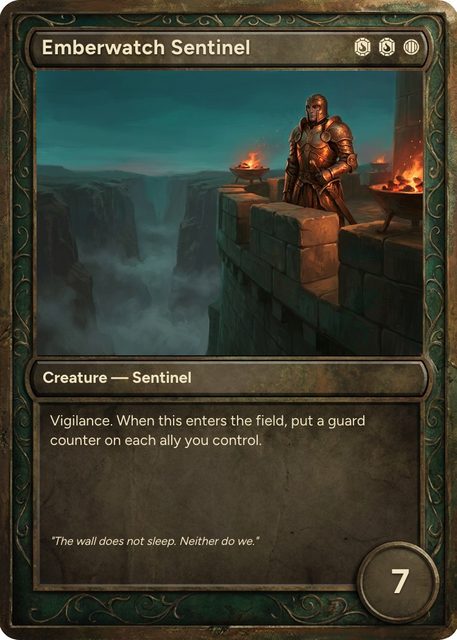
Editable TCG card layouts with the fields a trading card actually needs: name, type line, rules text, flavour text, a cost strip and a stat. Open one in ShuffleKit and it becomes your project, with the columns already wired to the design.
Card size
Poker, 2.5 × 3.5 in (750 × 1050 at 300 DPI)
Includes
Card fronts, a matching back, and a sample deck
Fields
Name, artwork, type, cost, rules, flavour, stat
Output
Edit in the browser, export PNG, SVG or a print PDF
A dark-fantasy trading card set: six faction frames and a shared back, poker sized and print-ready. Comes with a four-card sample deck you can edit, print or replace.
A downloadable file gives you one card and a lot of copy-paste. A template here opens as a project, where the design and the card list are separate things.
1
Add the template to a project
Free, and it copies the designs, the fields and the sample cards into a project of your own. The author's later changes never reach your copy.
2
Put your cards in the sheet
One row per card, with a column for each field the design uses. Type them in, or import a CSV and map your own column names onto the template's.
3
Change the design once
Move an element, swap the frame, restyle the type. Every card on that design follows, whether there are four of them or four hundred.
4
Export or print
PNG or SVG for digital play and Tabletop Simulator, or a print-ready PDF with bleed and cut lines. Print & Ship sends the deck to a print-on-demand partner without leaving the project.
What size is a trading card?
The question that arrives on this search more than any other. The templates here are poker sized, which is what print shops expect and what the sleeves on the shelf are cut for.
Card
Inches
Millimetres
Pixels at 300 DPI
Poker — these templates, and most print runs
2.5 × 3.5
63.5 × 88.9
750 × 1050
Euro poker — Magic: The Gathering, Pokémon
2.48 × 3.46
63 × 88
744 × 1039
Japanese — Yu-Gi-Oh!
2.32 × 3.39
59 × 86
697 × 1016
Bridge — for hands of a dozen cards or more
2.25 × 3.5
57.2 × 88.9
675 × 1050
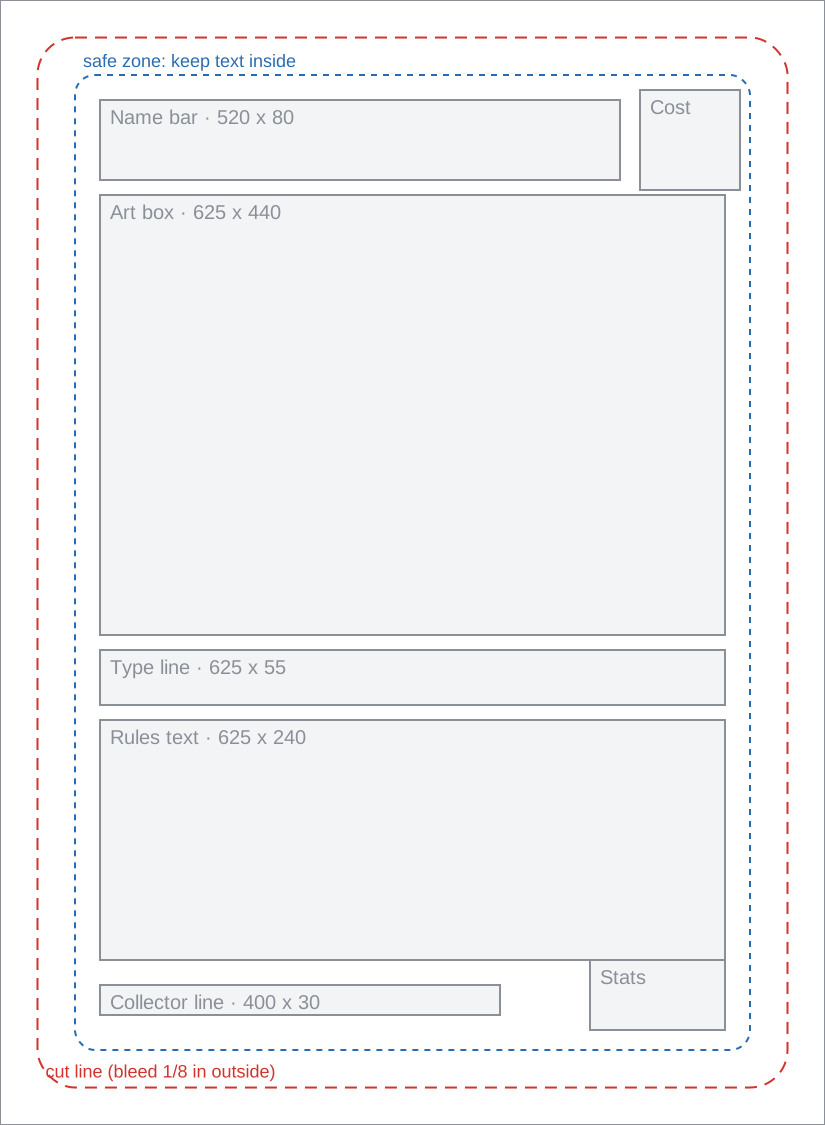
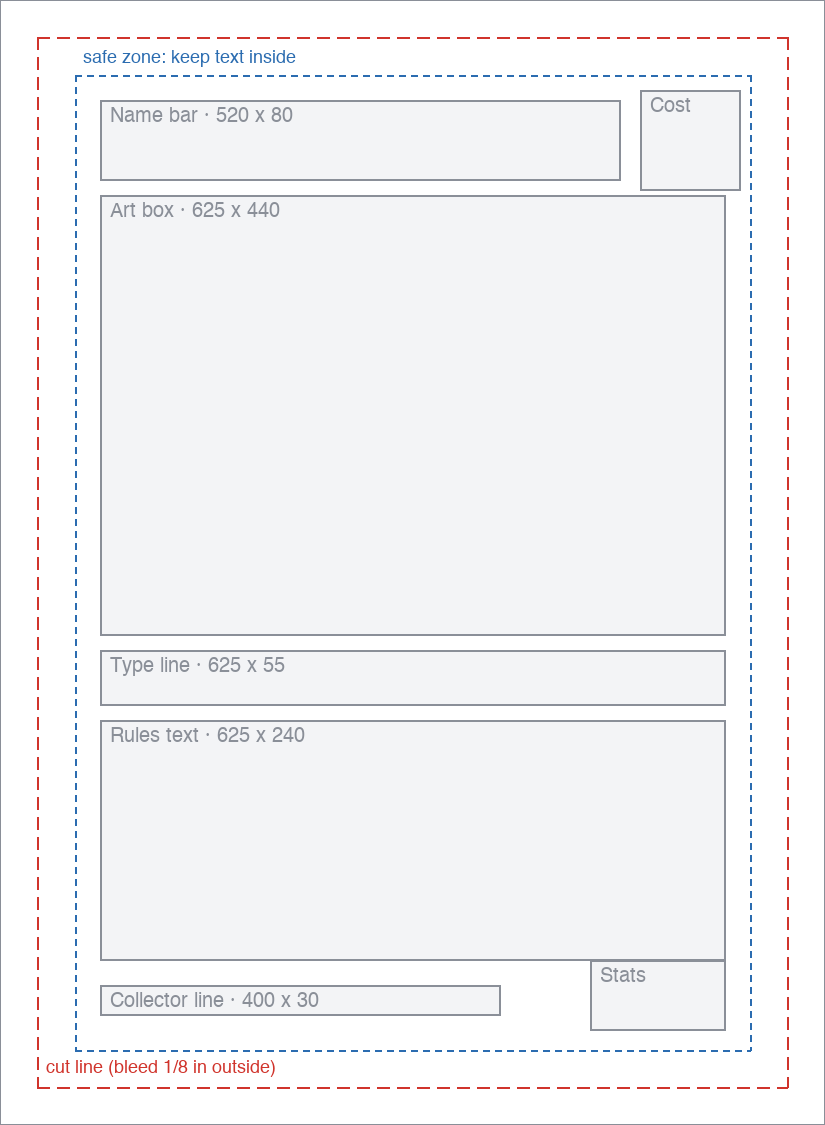
Poker and euro poker differ by half a millimetre, which is why one sleeve fits both. A print-on-demand partner will ask for an eighth of an inch of bleed on every edge on top of these numbers — 825 × 1125 for a poker card.
Yes. Adding a template to your project is free, and so is editing it. Paid plans cover higher export volumes and printing, not access to the templates.
What size are the cards?
Poker size, 2.5 by 3.5 inches, which is 750 by 1050 pixels at 300 DPI. That is the standard trading card size and the one print shops expect.
Can I print cards made from these templates?
Yes. Every template here is built at a printable size, so you can export a print-ready PDF or send the deck to a print-on-demand partner from inside ShuffleKit.
Do I have to start from scratch to change the design?
No. Adding a template copies its designs and fields into your own project, so you can move elements, swap artwork, rename fields or replace the frame entirely. Your copy is yours.
Can I use my own spreadsheet of cards?
Yes. Import a CSV and map your columns onto the template's fields, and every row becomes a card on the design.