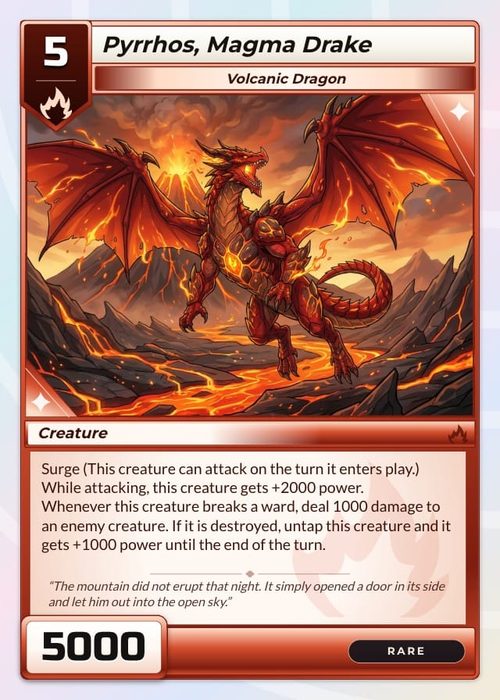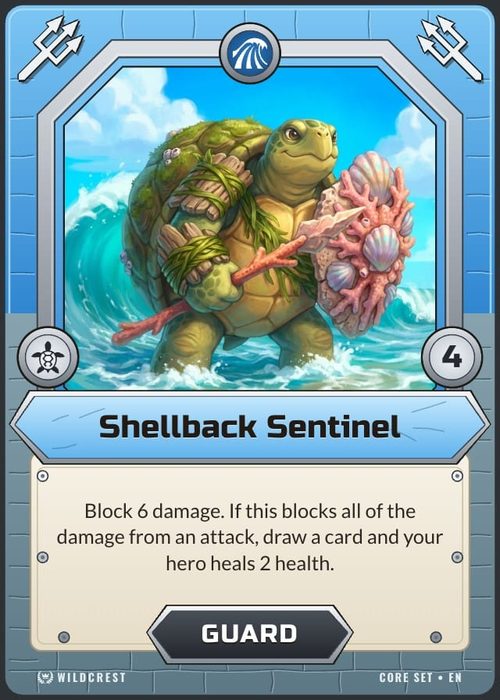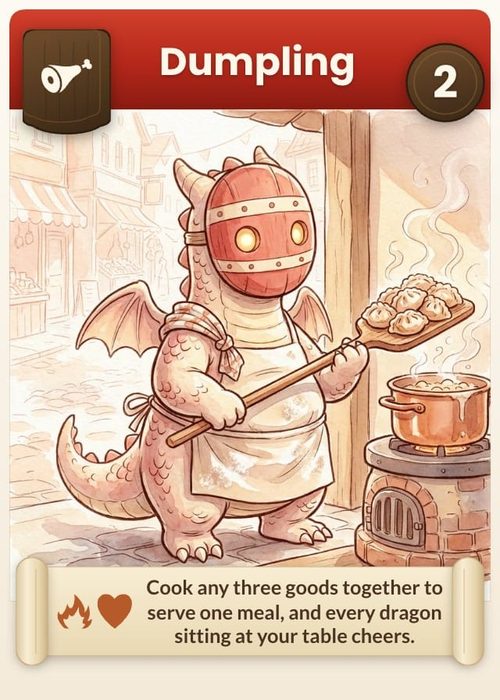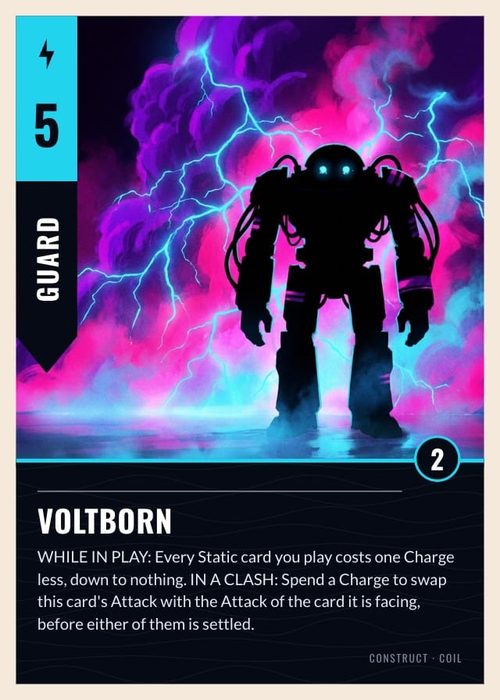
Most advice about making a card game assumes you're designing one deck that everyone shares. A trading card game doesn't work that way. You design a pool, and players cut their own decks out of it, so you're designing the space a few hundred different games get played in.
Which is why the order below is rules, then structure, then cards. Design a card first and six weeks later you have 80 of them and no idea whether they make a game.
This guide covers the parts specific to TCGs, from the rules skeleton to the spreadsheet that holds the set together. If you've never built a physical prototype, read how to make your own card game first.
Start With the Core Loop
Write the turn on one page before you design anything. Four questions:
- What happens in a turn, in order? Draw, resource, main, combat, end is a common shape; fewer phases is better.
- How does someone win? Damage, objectives, or decking an opponent. Pick one; alternate win conditions are a later problem.
- How big is a hand, and when do you draw? This sets the pace more than any card will.
- What happens when two things clash? Combat maths, priority, resolution order. Miserable to retrofit.
Play a turn out loud with imaginary cards; if you invent a rule halfway through, you're not done.
Choose Your Resource System
This decision has the longest shadow: it sets your variance, how many deck slots go to fuel, and how fast the game escalates.
Dedicated resource cards. Players include them in the deck and play one per turn. The most familiar model and the least forgiving, because every resource card is a dead slot and players routinely draw too many or too few. That variance suits a huge pool; in a 150-card set it hurts.
Any card can be a resource. Players put a card face down each turn as generic fuel. Nobody floods or gets stuck, and each turn asks whether a card is worth more played or buried. For a first set, this is what I'd recommend.
Automatic growth. Everyone gains one resource per turn. Easy to teach and zero variance, but every player's curve is identical and an axis of deckbuilding disappears.
Exhaust what you control. Your cards are the resource, so playing things makes you stronger, and whoever falls behind stays behind.
No resources at all. Hand size and draw are the only constraint, and all the pressure lands on your costs being right.
Change this later and you'll rewrite every cost on every card.
Decide Your Card Types
Three types is enough for a first set:
- Units. They stay on the table, have stats, do the fighting.
- Actions. One effect, then gone.
- Persistent non-units. Equipment, locations and ongoing effects that stick around but don't fight.
Add a resource type only if your system needs one. Every type costs you rules text, a layout variant and a slot in every deck, so before adding a fourth, try deleting it. A subtype like Beast or Vehicle is usually cheaper and carries most of the same flavour. Types must be recognisable at a glance, a layout job; our card graphic design rules cover it.
Build Factions That Are Bad at Something
Three to five factions is the sweet spot. Fewer and decks blur together, more and your set doubles in size.
Each one needs a colour, a mechanical bias, and a hole. The hole is the part people skip. If every faction can remove any threat, refill its hand and field big units, your factions are paint rather than design.
Build a grid to check: capabilities down the side (removal, draw, big units, speed, defence), factions across the top, each cell marked "good at", "bad at" or "can't". Every row needs one "can't" and every faction two weaknesses.
Keep neutral cards lean, ten to twenty; they appear in every deck, so a big neutral pool flattens the differences you just built.
Write the Deckbuilding Restrictions Early
These are rules, and they're also the calculator for the next section.
- Minimum deck size. Start at 40; it keeps a small pool viable and players see their best cards more often.
- Maximum copies. Three pushes variety and means fewer copies to print; four is the familiar default.
- Faction limits. Mono-faction is strongest for a first set, because identities stay legible and the best cards can't gather in one deck.
- Singleton. One copy of anything, ever. A lovely format that demands a much larger pool.
- Sideboards. Skip them for now.
Work Out Your Set Size From the Rules
With a 40-card minimum and three copies maximum, a player needs 14 distinct cards to fill a deck legally. That's the floor, and a deck built at the floor is an inventory, not a set of choices.
For a faction to feel like a choice you want two to three times that inside it, so 30 to 40 playable cards each. Four factions at 35 is 140, plus 15 or so neutral, landing around 155.
Most first sets come in between 120 and 180 unique cards. Under 100, two decks in the same faction end up nearly identical; over 200, you're balancing cards nobody has played. Design more than you print: writing 180 and shipping 150 is normal.
Rarity Is Not a Power Dial
Rarity does two jobs, and neither is "this card is stronger". The first is print economics, since scarcity is what makes a booster worth opening. The second is complexity pacing, the one that improves your game: commons are your grammar, clean repeatable cards players learn from, and rares are where the weird build-around cards live. If your rares are simply better commons, you've sold power instead of designing it. Our balancing guide covers why "rare shouldn't mean unbeatable".
A workable split of unique cards is 60% common, 25% uncommon, 12% rare and 3% mythic, with mythic worth dropping under about 120 cards. The share of your set is not the share of what players open: rares can be 12% of your cards but one booster slot in twelve, and that second number decides how long building a deck takes. Keep decks buildable from commons and uncommons, and let rares be upgrades.
If you're doing print-and-play or selling fixed decks, skip rarity completely.
Put the Whole Set in a Spreadsheet
One row per card, in one sheet. A folder of 150 image files isn't a set, because every question about the whole thing turns out to be a sorting question. Cost curve lumpy? Sort by cost. Enough two-drops in Faction C? Filter and count. Which cards are untested? Filter by status.
| Column | Type | Why it's there |
|---|---|---|
| Name | Text | Unique, and what you'll search by |
| Type | Select | Drives which layout the card uses |
| Faction | Select | Colour-coded so the grid is readable at a glance |
| Cost | Number | Sort by this constantly |
| Attack / Health | Number | Units only, leave blank elsewhere |
| Rules text | Text | The printed effect, and nothing that belongs in a number column |
| Rarity | Select | Complexity tier, not a power tier |
| Status | Select | Draft, Testing, Locked |
More columns (collector numbers, keywords, flavour text, art) earn their place as the set matures.
One rule: if a number matters for balance, it gets its own column. A cost that lives inside a sentence of rules text can't be sorted, filtered or checked, and that's where balance problems hide.
(In ShuffleKit, importing the sheet turns every column into a typed property that layouts read directly, so changing a cost in the sheet changes the card.)
Starter Decks and Testing Archetypes
You don't need a finished set to play. With a 40-card minimum and three copies maximum, two starter decks need roughly 28 distinct cards between them, so pick two factions, write about 30 cards, and play. What you learn changes the other 120.
Aim each deck at a different archetype, so you're testing the shape of the game rather than card values:
- Aggro. Cheap, fast, wants it over by turn six.
- Midrange. Efficient cards, wins on quality.
- Control. Answers everything, wins late.
- Combo. Assembles a specific interaction.
Every faction should support one of these clearly and one badly. Then play every pairing, not just the fun ones; the matchup you're avoiding is usually the broken one.
Keep starter decks as saved lists with quantities (decks in ShuffleKit work this way). For getting games in, our playtesting comparison covers the options honestly; our own browser table seats six.
The Rest of the Pipeline, Briefly
Not TCG-specific, still essential:
- Prototyping. Print, sleeve, play, repeat. See how to make your own card game.
- Card layout. See game card graphic design and the template editor.
- Balance. See balancing a trading card game.
- Placeholder art. One picture per card in a matching style, drawn from each row by the AI trading card generator, is enough to playtest with while the final art is commissioned.
- Printing. See print and ship and card game printing.
The card game design guide is the whole pipeline in one narrative.
Your First Set Checklist
- The turn is written down and playable out loud
- A resource system chosen, with its variance understood
- Three to five factions, each with two documented weaknesses
- Deck minimum, copy limit and faction rules set before card one
- Set size calculated from those rules, likely 120 to 180
- Every card in one sheet, balance numbers in their own columns
- Two starter decks played against each other, and every matchup after that
Getting the First Set Out of Your Head
The gap between a folder of card ideas and a set someone can play is mostly structure, and structure is unglamorous work: numbering, sorting, keeping 150 cards consistent when one rule changes. So do the boring parts early. Write the turn, pick the restrictions, let the set size fall out of the arithmetic. Two rough starter decks will teach you more in one evening than another month of designing alone.
If the slow part turns out to be keeping the sheet and the cards in sync, that's the job ShuffleKit does. If you want the card faces solved before the rules are, the trading card templates give you a frame, the fields and a sample deck to pull apart. If you want the layout Magic players already know, the MTG style card maker starts you on an original frame built that way, and the Yu-Gi-Oh style card maker does the same for monster, spell and trap cards. It's free to start, and I'd love to hear how your first set goes. Build your first set.