You designed what you thought was an awesome card. Great art, exciting effect, feels powerful in exactly the right way. Then someone plays it during a playtest and the game just... ends. No counterplay, no tension, no fun. Now you're staring at a ban list for a game that isn't even published yet.
Balancing a trading card game is one of the hardest parts of TCG design, and it's the thing that separates games people play once from games they keep coming back to. These five tips won't make balancing effortless (nothing will), but they'll give you a framework that catches the worst problems early and keeps your game fun as it grows.
One Broken Card Warps the Whole Game
An unbalanced card doesn't just break one match. It warps your entire game around it. Players stop building creative decks because there's no reason to run anything other than the strongest option. Matches become predictable. Strategy disappears. And the more cards you add in future sets, the worse the problem gets, because every new card interacts with the broken one in ways you didn't anticipate.
Getting balance right early saves you from painful redesigns later. Here's how to approach it.
Tip 1: Set Up a Cost Curve Before You Design Cards
Before you even start worrying about individual cards, set up a basic cost curve for your game. A cost curve is just a table that maps each cost level to the stats and abilities a card should roughly have at that price.
For example, if your game has creatures with attack and defence values, decide what a 1-cost, 2-cost, and 3-cost creature looks like with no abilities at all. Those "vanilla" baselines become your reference point. When a card has a powerful ability, it should pay for it with lower stats. When a card has no abilities, it can get slightly better stats than the baseline as a reward.
Write this down in a spreadsheet and check every new card against it. You'll be surprised how often a card that "feels fine" during playtesting is actually way above the curve when you compare the numbers. The curve won't catch every problem, but it catches the obvious ones before they ever hit the table.
Tip 2: Make Sure Every Effect Has at Least Two Answers
Whenever you design a new card or ability, ask yourself one question before anything else: How can my opponent deal with this? You should be able to name at least two answers.
This is a useful rule of thumb because a single counter isn't always enough. Experienced players build decks to neutralise specific threats. If there's only one card in the game that can stop your powerful ability, a smart player will just make sure that counter card never hits the table by running cards that destroy it, discarding it, or simply outpacing it. Two or more counters make that kind of deck-warping much harder to pull off.
If you can't think of two ways an opponent could reasonably prevent or respond to an effect, you have a few options. You can design a new card specifically to act as a counter. You can add a drawback to the powerful card that creates a built-in vulnerability. Or you can rework the effect entirely.
The Drawback Principle
For cards that are meant to feel rare and powerful (your chase cards, your mythics, your ace-in-the-hole plays) balance through drawbacks rather than making them untouchable. A massive effect paired with a meaningful risk creates exciting moments. A massive effect with no downside creates a stale game.
The key word is "equal." The drawback should be proportional to the power of the effect. A card that can revive itself every turn is exciting, but if it revives unconditionally with no way to prevent it, it's oppressive. Adding a condition, like requiring another specific card type to be in play, gives the opponent a clear line of counterplay: remove that required piece, and the revival stops.
Tip 3: Write Specific Effects, Not Broad Ones
Broad card effects are a ticking time bomb. They might seem fine when you first design them, but they become increasingly dangerous as you add new cards to the game.
Here's the classic trap. You design a defensive card that reads something like "block all attacks this turn" and it costs relatively little to play. In your current card pool, it works okay. The strongest attacks are manageable, and the tempo loss of playing a purely defensive card feels balanced. But six months later, you release a new set with much stronger creatures. That same cheap defensive card now blocks attacks it was never meant to handle, completely shutting down your exciting new high-cost cards.
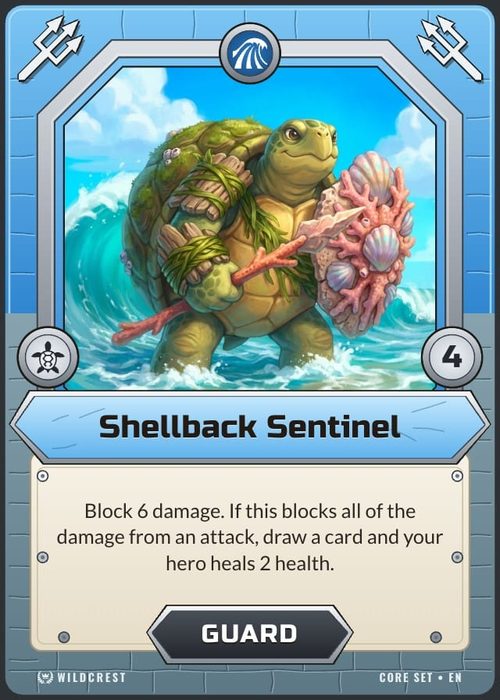
The fix is specificity. Instead of "block all attacks," try "block attacks with a value of 700 or less." Now the card has a ceiling. It's effective against small and medium threats, but it can't single-handedly neutralise your most powerful cards. Players have to make a strategic choice about when to use it rather than just dropping it whenever they're attacked.
Broad Effects That Always Cause Problems
"Destroy all" effects with low play costs. If a card can wipe the board for cheap, it punishes your opponent for playing the game. Either raise the cost significantly or add restrictions: destroy all cards of a specific type, or destroy all cards below a certain cost threshold.
Blanket protection effects. Full immunity for a turn sounds dramatic, but it often just stalls the game. Add conditions: protection only against certain attack types, only for specific card categories, or only up to a certain damage threshold.
Unlimited copies per deck. If a disruptive effect can be played three or four times per match, multiply its impact accordingly. A slightly annoying card played once becomes a game-ruining card played four times. Consider limiting copies or adding a once-per-game restriction for your most impactful effects.
Future-Proofing Your Card Effects
Every time you write a card effect, ask yourself: Will this still be balanced if I print a card twice as powerful as anything currently in the game? If the answer is no, add a numeric cap, a type restriction, or some other limiting condition. Specific effects age gracefully. Broad effects become liabilities.
Tip 4: Playtest More Than You Think You Need To
You've heard "playtest your game" a thousand times. But when it comes to balance specifically, how you playtest matters just as much as how often. (If finding opponents is the bottleneck, we compared the best card game playtesting software for testing online.)
Test at Different Quantities
A single copy of a card in a deck plays very differently from three copies. One copy is an occasional surprise, a nice bonus when it shows up. Multiple copies can become a consistent strategy that your opponent has to plan around every game. Test both scenarios. A card that feels fair as a one-of might be suffocating when a player builds their whole deck around drawing it reliably.
Test the Combo Potential
Individual cards might be perfectly balanced on their own but become broken when combined. Play through scenarios where your cards interact with each other in the most synergistic way possible. How many turns does it take to set up a powerful combo? If it takes one or two turns, it's probably too easy. If it requires a five-card setup that takes half the game to assemble, the payoff might be worth it, but test whether the game is still fun during that buildup.
Ask the Fun Question
This might be the most important test of all. After a playtest, ask both players: Was that fun?
A card can be technically balanced (it wins exactly 50% of the time in testing) and still be miserable to play against. Cards that make one player feel helpless, matches that feel decided from the opening hand, combos that turn the last half of the game into a formality. These are balance problems that the numbers won't catch. You need real humans telling you how the game feels.
Rare Shouldn't Mean Unbeatable
It's tempting to make your rarest cards the strongest. After all, if someone pulls a rare card from a pack, shouldn't it feel powerful? But there's a line between "powerful and exciting" and "so strong the game revolves around it."
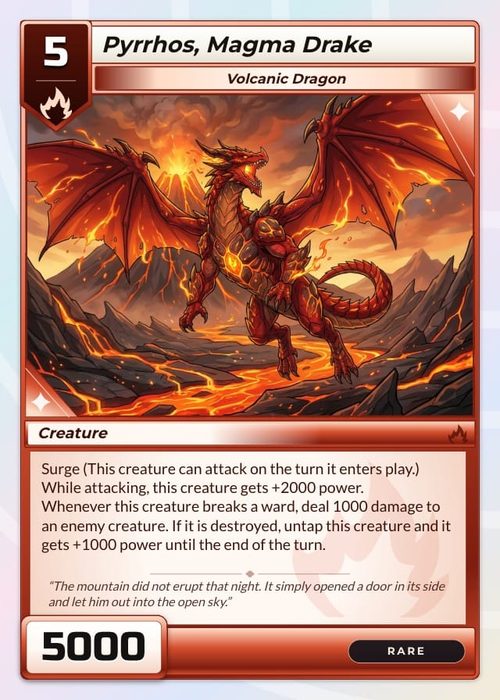
If you find yourself spending entire matches trying to set up one specific card rather than making interesting decisions, that card is probably too strong, even if it's rare. Rarity should affect collectability and thematic importance, not determine who wins the game. A better approach is to make rare cards different rather than strictly better. Give them unique mechanics, interesting synergies, or flashy effects that are strong but not unbeatable. Higher stats than normal? Sure. Invincible stats that nothing in the game can touch? That's a problem.
Tip 5: Log Your Playtests and Track Win Rates
Gut feeling only gets you so far. Once your game has more than a dozen cards, you need actual numbers to spot balance issues.
The simplest way to do this: create a spreadsheet and log every playtest. Write down which decks or strategies were used, who won, and which cards showed up in the winning plays. After ten or fifteen games, patterns start jumping out. Maybe one strategy is winning 80% of the time. Maybe a specific card appears in every single winning game.
You don't need complex stats. Even a basic tally of "games won by strategy X" is enough to catch the big problems. If two players of similar skill are using different strategies and one of them wins seven out of ten games, something in that strategy is probably too strong.
The other thing tracking does is settle arguments. When someone says "that card is broken," you can look at the data instead of guessing. Sometimes the card really is too strong. Sometimes it just felt bad to lose to. The spreadsheet tells you which one it is. (If your set lives in ShuffleKit, playtest notes pin that feedback to the card itself, and Shufflo AI can run a balance pass across the whole set.)
Balance Is a Process, Not a Destination
No card game is perfectly balanced on its first pass. Even the biggest TCGs in the world release cards that need errata, restrictions, or outright bans. The goal isn't perfection. It's having a system that catches the biggest problems early and keeps the game fun as it evolves.
Start with these five principles (ensure counterplay exists, be specific in your wording, playtest relentlessly, build a cost curve, and track your data) and you'll avoid the most common pitfalls that sink homemade TCGs before they ever reach an audience.